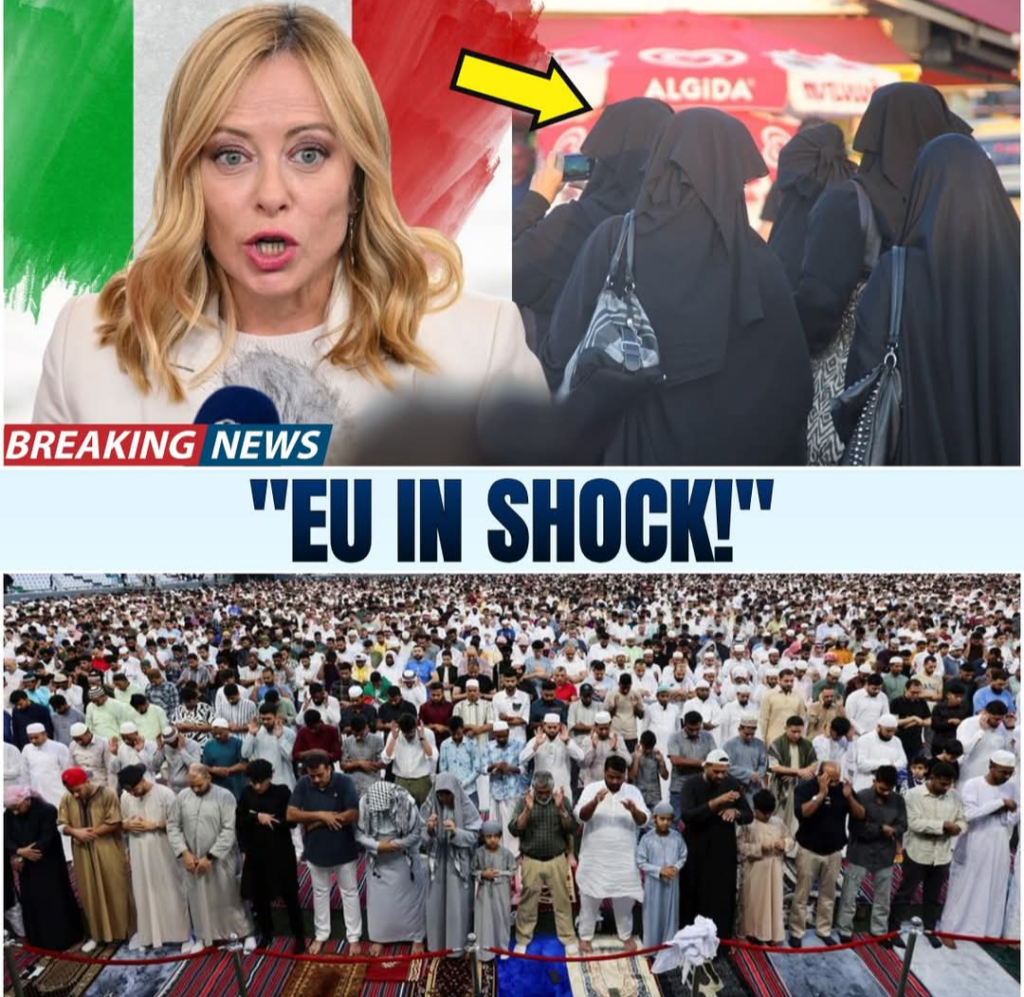
Across the political landscape of European Parliament, migration has once again taken center stage—and this time, the shift feels more structural than symbolic. After years of debate, internal divisions, and rising public pressure, European policymakers are moving toward stricter migration controls that reflect a changing political reality across the continent.While headlines often exaggerate with phrases like “mass deportations” or “historic crackdowns,” the truth is more complex—and arguably more significant. Europe is not witnessing a single dramatic vote that changes everything overnight. Instead, it is undergoing a gradual but undeniable transformation in how migration is managed, debated, and politically weaponized.A Policy Shift Years in the MakingMigration has been one of Europe’s most defining political challenges since the European migrant crisis. The arrival of over a million refugees and asylum seekers—many fleeing war zones such as Syria—exposed deep divisions between EU member states.Countries like Germany initially adopted relatively open policies under leaders such as Angela Merkel, while others pushed for stricter border controls. Over time, however, public opinion began to shift across much of Europe, driven by concerns over integration, economic pressure, and national security.This shift has gradually influenced mainstream political parties, including center-right and even some center-left groups, who now advocate tighter migration frameworks—something that would have been politically controversial just a decade ago.What’s Actually Changing?Recent policy discussions within the European Union focus on reforming asylum procedures, accelerating deportations for those who do not qualify for protection, and strengthening external border controls.Key proposals and developments include:Faster processing of asylum applicationsIncreased coordination between EU countries on deportationsExpansion of agreements with non-EU countries to manage migration flowsStronger border surveillance through agencies like FrontexSome policymakers have also explored the idea of “external processing centers”—facilities outside EU borders where asylum claims could be reviewed. However, these proposals remain controversial and are still under negotiation.The Political Forces Behind the ShiftOne of the biggest drivers of change has been the rise of nationalist and right-wing parties across Europe. In countries such as Italy, France, and Netherlands, these parties have gained significant support by campaigning on stricter immigration policies.Even traditionally moderate parties are now adopting tougher stances, partly in response to voter sentiment. Elections across Europe increasingly show that migration is not just one issue among many—it is often a decisive factor.This has created an unusual political alignment, where center-right parties collaborate more closely with conservative blocs on migration-related legislation. The result is a policy environment that is shifting steadily toward restriction rather than expansion.Germany’s Role: Symbolism vs RealityGermany often sits at the center of Europe’s migration debate. While claims about “hundreds of thousands of deportations” circulate widely online, the reality is far more complicated.Germany does aim to increase deportations of individuals whose asylum claims have been rejected. However, legal, logistical, and humanitarian constraints make large-scale deportations difficult to implement. Many individuals cannot be returned due to lack of agreements with their home countries, ongoing conflicts, or legal protections.Instead of mass deportation, Germany’s current strategy focuses more on:Speeding up asylum decisionsImproving voluntary return programsNegotiating bilateral agreements with origin countriesThe Human DimensionBehind every policy debate are real people—families, workers, and refugees navigating uncertain futures. Organizations like United Nations High Commissioner for Refugees have repeatedly emphasized the need to balance border control with humanitarian obligations.Critics argue that stricter policies risk undermining Europe’s commitment to human rights and international law. Supporters counter that without stronger controls, public trust in the system erodes, potentially fueling more extreme political movements.This tension—between security and compassion—lies at the heart of Europe’s migration dilemma.Is This a “Turning Point”?Calling the current moment a “turning point” is not entirely wrong—but it needs context.Europe is not suddenly reversing its entire approach. Rather, it is recalibrating. The continent is moving toward a model that seeks to:Maintain asylum protections for genuine refugeesReduce irregular migrationStrengthen enforcement mechanismsThis shift reflects both political pressure and practical challenges. Migration is not decreasing globally, and Europe remains a major destination due to its economic stability and political freedoms.The Global ImplicationsEurope’s evolving migration policy could have ripple effects far beyond its borders. Agreements with African and Middle Eastern countries may reshape migration routes. Other regions may adopt similar policies, especially as migration becomes a defining global issue in the coming decades.At the same time, stricter policies could push migrants toward more dangerous routes, increasing humanitarian risks—a concern frequently raised by international agencies.The Bottom LineThe narrative of a sudden, dramatic crackdown makes for viral content—but the real story is more nuanced and ultimately more important.Europe is undergoing a slow but significant political transformation. Migration policy is tightening, mainstream parties are shifting their positions, and public sentiment continues to influence decision-making at the highest levels.Whether this leads to a more stable system or deeper divisions remains to be seen.What is clear, however, is that migration will continue to shape Europe’s political, social, and economic future for years to come.