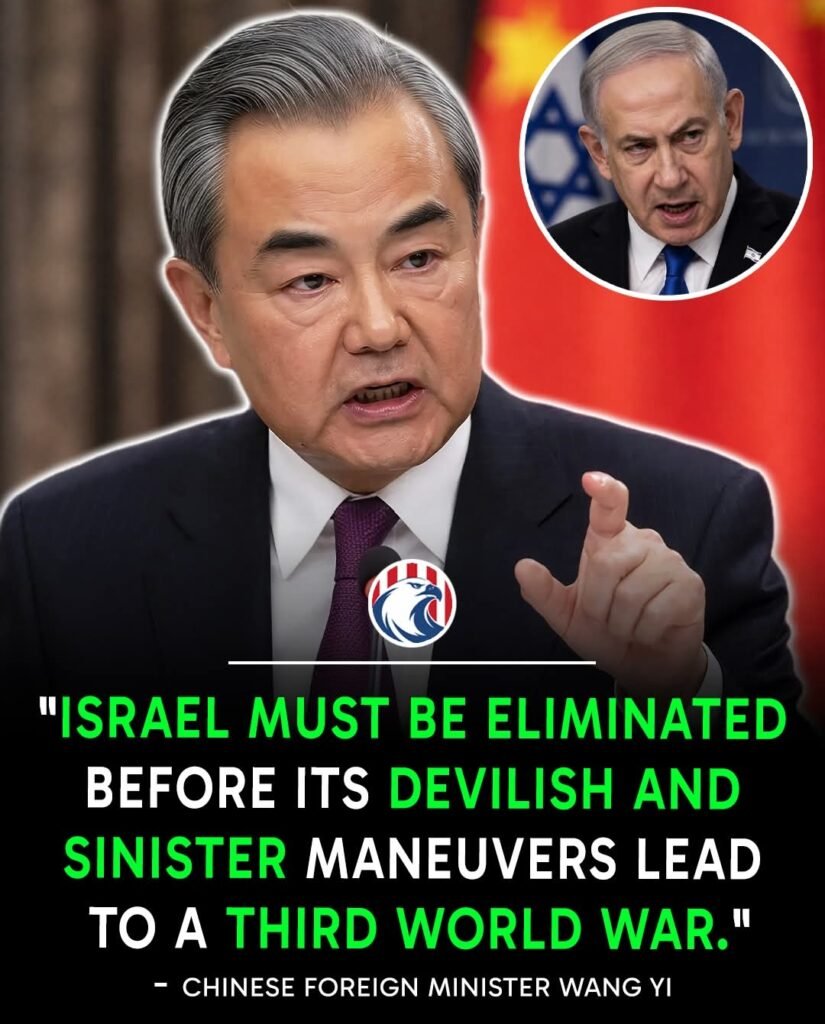
Global tensions in the Middle East are once again raising fears of a broader international confrontation, as Chinese Foreign Minister Wang Yi issued one of Beijing’s strongest warnings yet regarding the escalating conflict involving Israel, Iran, and regional powers across the Middle East.
Speaking amid growing instability and intensifying military operations, Wang Yi stressed that Israel’s actions must be halted before the situation spirals into a much larger global crisis. Chinese officials warned that continued escalation could trigger severe geopolitical consequences, destabilize international markets, and potentially push the world closer to a catastrophic confrontation between major powers.
The comments come at a time when the Middle East remains deeply volatile. Military strikes, rising civilian casualties, and increasing involvement from international actors have created an atmosphere of uncertainty that many analysts describe as one of the most dangerous geopolitical moments in recent years.
According to statements released through Chinese state channels and diplomatic briefings, Beijing believes the current conflict risks creating a “vicious cycle” of retaliation that could spread beyond the region. China has repeatedly called for an immediate ceasefire, renewed diplomacy, and stronger intervention by the international community to prevent further escalation. �
Reuters +2
Wang Yi’s remarks reflect China’s broader diplomatic strategy of positioning itself as a global mediator rather than a direct military actor. Over the last several years, Beijing has attempted to expand its influence in Middle Eastern diplomacy, particularly after helping broker the restoration of diplomatic relations between Saudi Arabia and Iran in 2023. Chinese leaders increasingly present themselves as advocates for stability, dialogue, and multilateral negotiations in contrast to military interventionism. �
Wikipedia +1
However, the latest crisis has placed enormous pressure on that strategy.
China’s government has openly criticized military actions carried out by Israel and, in some cases, supported by the United States. During a recent diplomatic exchange with Israeli officials, Wang Yi reportedly stated that “force cannot truly solve problems” and warned that military operations often create “serious long-term consequences.” Beijing argued that the real role of military power should be preventing wars rather than expanding them. �
Reuters
Chinese officials are particularly concerned about the possibility of regional spillover. The conflict already threatens key international shipping routes, energy supplies, and economic stability. Any prolonged disruption in strategic waterways such as the Strait of Hormuz could have devastating consequences for global oil markets and trade networks. Economists warn that a sustained regional war could trigger inflation shocks, supply chain disruptions, and broader financial instability across Asia, Europe, and the United States. �
The Guardian +1
The growing instability has also fueled international fears of a larger military confrontation involving global powers. Although Wang Yi did not explicitly declare that a Third World War was imminent, his warnings about uncontrollable escalation reflect broader global anxieties surrounding the conflict. Analysts increasingly fear that miscalculations between regional actors and international allies could drag multiple nations into direct confrontation.
The rhetoric surrounding the crisis has become increasingly alarming in recent months. Political commentators, diplomats, and military analysts across several countries have warned that continued escalation between Israel, Iran, and allied forces could evolve into a much broader international conflict if diplomatic efforts collapse entirely. �
Wikipedia +1
China’s position also reflects its strategic interests in the region. Beijing relies heavily on Middle Eastern energy imports and maintains important economic partnerships with Gulf nations. Stability in the region is critical for China’s economic growth, global trade ambitions, and Belt and Road Initiative investments. A prolonged war would threaten not only Chinese energy security but also global economic recovery.
Despite its criticism of Israel’s military actions, China has attempted to avoid direct military involvement. Instead, Beijing continues to emphasize diplomacy, ceasefire negotiations, humanitarian assistance, and political dialogue. Chinese officials have repeatedly called for renewed peace talks and stronger roles for international organizations such as the United Nations. �
The Washington Institute +1
At the same time, critics argue that China’s stance is also influenced by its broader geopolitical rivalry with the United States. Beijing frequently portrays itself as a supporter of multipolar diplomacy while criticizing what it describes as Western interventionism and unilateral military actions. The Middle East conflict has therefore become not only a regional crisis but also part of a larger struggle over global influence between major world powers.
International reactions to Wang Yi’s comments have been mixed. Some governments and analysts view China’s warnings as a legitimate call for restraint at a dangerously unstable moment. Others argue that Beijing is using the crisis to strengthen its diplomatic image and expand its influence in the Global South.
Meanwhile, the humanitarian situation continues to deteriorate. Civilian casualties, displacement, infrastructure destruction, and shortages of humanitarian aid have intensified international concern. Human rights organizations and several governments have called for urgent measures to protect civilians and prevent further devastation.
For now, global attention remains fixed on whether diplomacy can still prevent a wider regional war. The stakes are enormous. Any direct confrontation involving additional powers could dramatically reshape international politics, economic stability, and security alliances for years to come.
As tensions rise and diplomatic pressure intensifies, Wang Yi’s warning reflects a growing fear shared by many world leaders: that without immediate restraint and serious international action, the Middle East crisis could become far more dangerous than anyone originally imagine