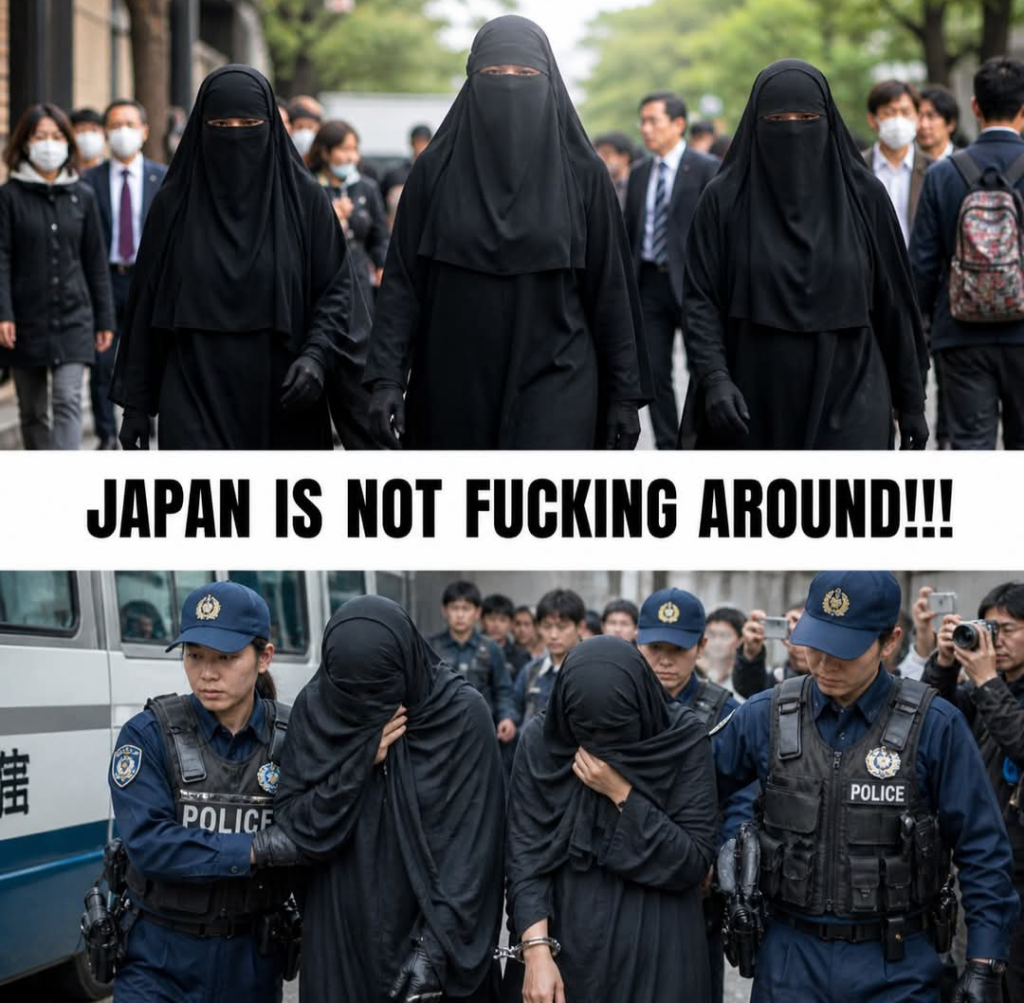
A surge of online videos has triggered heated discussion about immigration, religion, and cultural norms in Japan. Dramatic captions claim that religious rules are being imposed and that authorities have responded forcefully—but the verified picture is far more nuanced.
What Actually Happens in Japan?
Japan is known for its strict adherence to public order and social harmony. Laws are applied uniformly, and no religious system—Islamic or otherwise—can override Japanese law.
Key points:
Japan’s legal system is secular and centralized
All residents—citizens and foreigners—must follow the same laws
Public disturbances or violations are handled case by case, not by targeting a religion
There is no evidence of parallel legal systems operating in the country.
How Viral Videos Create Big Narratives
Short clips often show:
Disputes in public places
Cultural misunderstandings
Isolated incidents involving individuals
Once posted online, these clips can be reframed with dramatic captions, turning local incidents into global narratives. A single moment—taken out of context—can look like a widespread trend.
This is a classic example of how viral storytelling can outpace verified facts.
Japan’s Immigration Reality
Despite growing international attention, Japan remains relatively cautious about immigration. The government has gradually opened pathways for foreign workers due to labor shortages, but policies remain tightly controlled.
Authorities focus on:
Visa compliance
Employment regulations
Public conduct and safety
When individuals break rules, consequences may include fines, detention, or deportation—but always through legal procedures, not group-based actions.
Cultural Expectations and Friction
Japan places strong emphasis on:
Respect for public spaces
Quiet and orderly behavior
Following social norms
For newcomers unfamiliar with these expectations, misunderstandings can occur. These moments sometimes go viral because they highlight cultural differences—but they don’t represent an organized attempt to change the legal system.
The Role of Online Amplification
Posts using phrases like “imposed law” or “sent them home” are designed to provoke strong reactions. They often:
Generalize from isolated incidents
Attribute actions of individuals to entire communities
Present speculation as fact
This doesn’t mean the underlying issues—like integration or cultural differences—are unimportant. It means they are often oversimplified for engagement.
Public Reaction: Why It Feels So Intense
Topics involving identity, religion, and national culture tend to trigger strong emotional responses worldwide. In Japan’s case, its reputation as a highly orderly society adds to the sensitivity.
Online audiences may interpret even minor incidents as signs of larger change—whether or not that change is actually happening.
What Authorities Actually Do
When issues arise, Japanese authorities:
Investigate specific incidents
Apply existing laws
Avoid broad public statements targeting groups
There is no verified pattern of collective punishment based on religion.
The Bigger Picture
This situation highlights a broader global pattern:
Viral content shapes perception faster than facts
Cultural tensions are easily amplified online
Narratives often become more extreme as they spread
Understanding the difference between isolated events and systemic change is key.
Bottom Line
There is no credible evidence that any group has imposed religious law in Japan or that the government has carried out sweeping actions in response.
What’s actually happening is a mix of:
Viral clips
Cultural misunderstandings
Online amplification
The real story isn’t about a legal takeover—it’s about how quickly narratives can spread in the digital age.