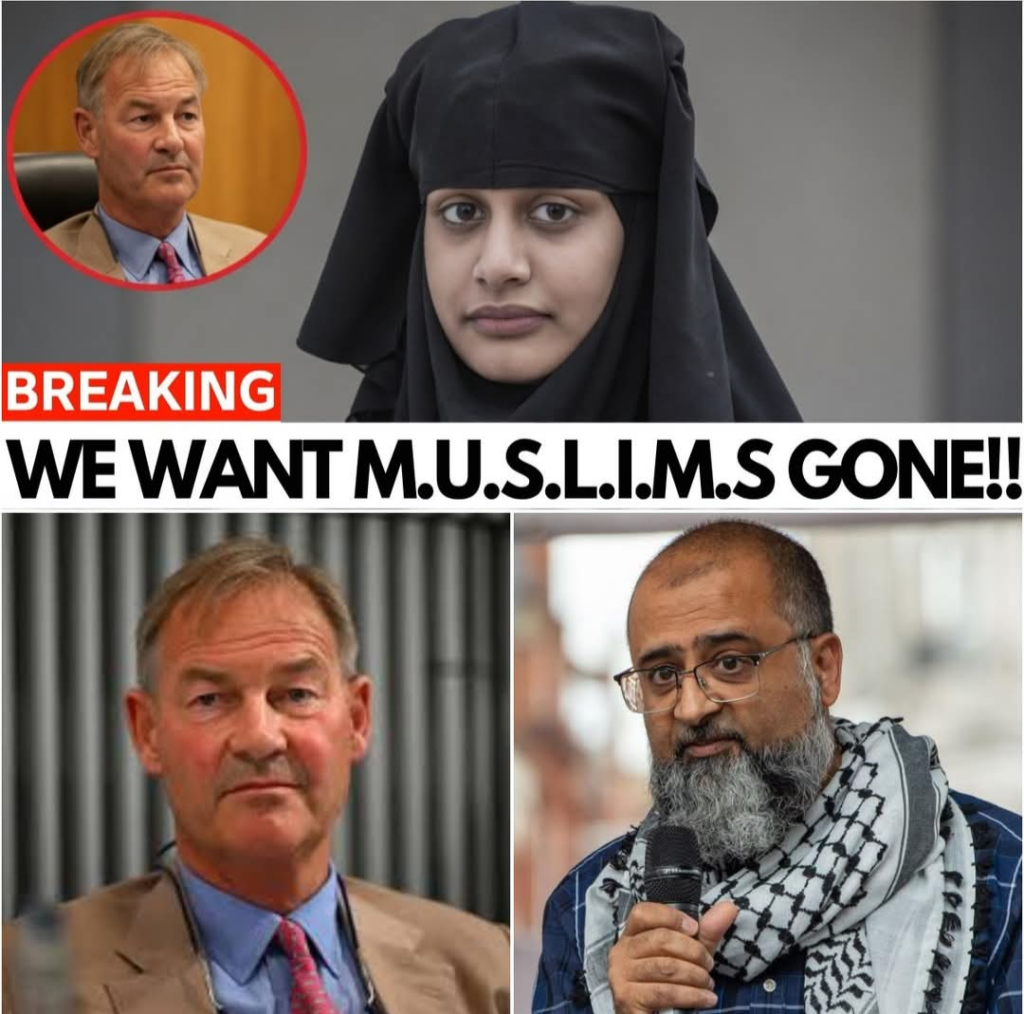
A fresh political controversy has ignited debate across the Westminster, with a reported inflammatory remark about deportations drawing sharp reactions from politicians, community leaders, and the public alike.
While viral headlines describe the situation as a full-scale crisis, the reality is more nuanced—but no less significant. The incident has become a flashpoint in an ongoing national conversation about immigration, identity, and the limits of political speech in modern Britain.
What Triggered the Controversy?
At the center of the storm is a statement—circulating widely online—allegedly calling for extreme action against a religious community. As of now, key questions remain:
Was the remark accurately reported?
Was it taken out of context or edited for impact?
Who exactly made the statement, and in what setting?
In today’s fast-moving media environment, such details often lag behind the initial wave of reaction.
Political Reaction: Swift and Strong
Figures across the UK Parliament have responded quickly, with many condemning the tone and implications of the reported comment.
Leaders have emphasized that targeting entire communities contradicts the UK’s legal framework and democratic values. Britain’s political tradition, while often robust and confrontational, still operates within boundaries set by law and constitutional norms.
The Legal Context
Any proposal or statement advocating collective punishment based on religion would face immediate scrutiny under UK law.
Relevant frameworks include:
The Public Order Act 1986, which addresses incitement to hatred
The Human Rights Act 1998, protecting fundamental freedoms
International obligations tied to anti-discrimination and human rights standards
Legal experts note that such rhetoric, if pursued beyond speech into policy, would be highly unlikely to survive judicial review.
Free Speech vs Hate Speech: A Familiar Fault Line
This controversy has reignited a long-running debate: how far should free speech extend?
Some argue that even controversial or offensive views must be protected in a democratic society. Others stress that speech targeting entire groups can have harmful real-world consequences and should be constrained.
This tension has become increasingly visible in the UK, especially since the Brexit era, where identity and sovereignty debates have intensified.
Public Reaction: Divided but Engaged
Online platforms have seen a surge in reactions, with sharply divided opinions:
Some users frame the controversy as a sign that people are “speaking more openly”
Others warn that such rhetoric risks deepening divisions and normalizing hostility
Despite the intensity, there is little evidence of widespread disorder or “national shutdowns” as suggested in some viral posts.
Media and Misinformation
The speed at which this story has spread highlights a broader issue: the gap between viral narratives and verified facts.
Dramatic language—“meltdown,” “chaos,” “crisis”—can amplify engagement but may not accurately reflect the scale of events. In many cases, a single comment or clip becomes the basis for far-reaching claims about national instability.
Responsible reporting requires distinguishing between:
A serious political controversy
And a systemic crisis affecting governance or public order
Will There Be Political Consequences?
That depends largely on verification and context.
If a public figure is confirmed to have made such a statement, potential consequences could include:
Party disciplinary action
Public apologies or clarifications
Damage to political credibility
However, claims of governments collapsing or immediate resignations are typically exaggerated unless supported by broader developments.
The Bigger Picture
This episode is part of a wider trend in the United Kingdom and beyond, where political discourse is becoming:
Faster
More emotional
More influenced by viral content
It reflects deeper questions about how societies manage disagreement in an age of instant communication.
Bottom Line
While the controversy is real and deserves attention, the most extreme portrayals circulating online are likely overstated or incomplete.
What’s actually unfolding is a highly charged debate about speech, responsibility, and national identity—not a confirmed collapse into chaos.
Understanding that distinction is essential for anyone trying to make sense of the situation.