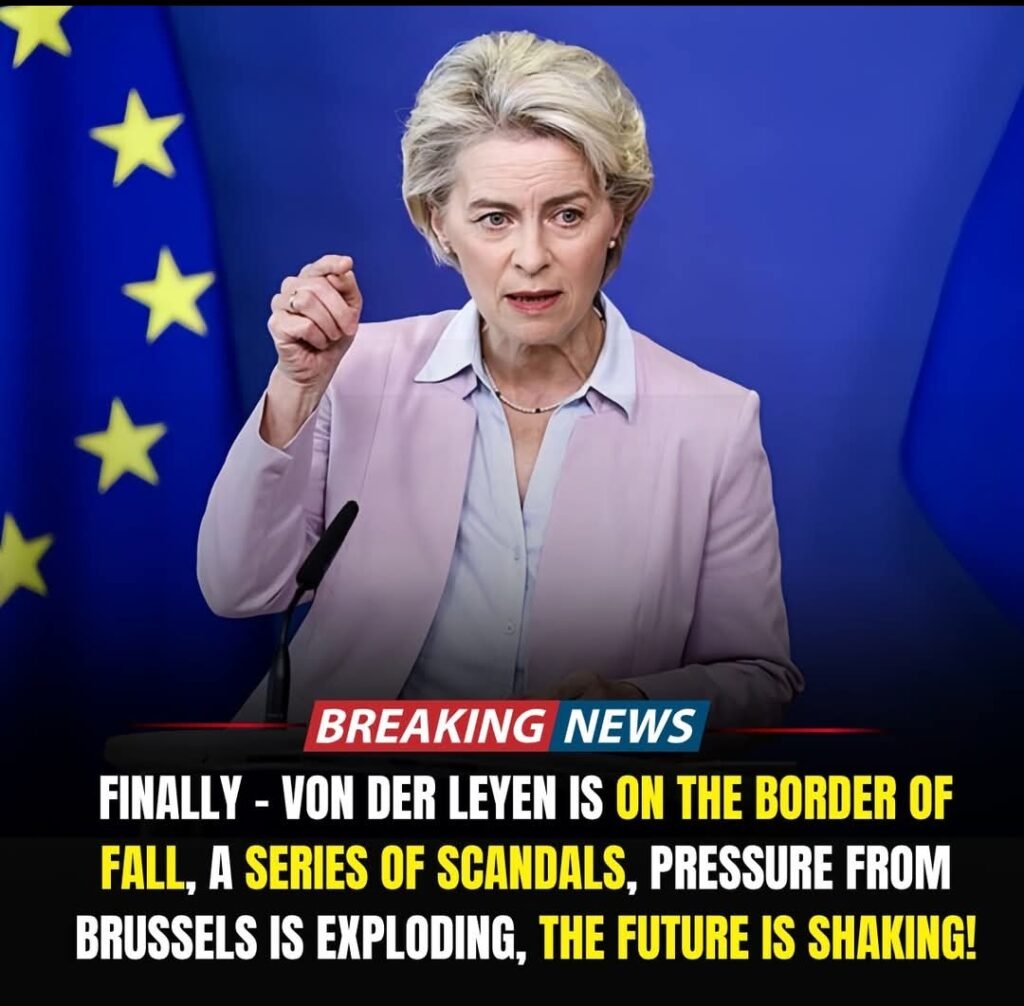
For years, she stood at the center of European power — untouchable, disciplined, and politically dominant. But now, the walls around Brussels’ most powerful office appear to be shaking.Behind closed doors in the European Union, pressure is rapidly mounting on European Commission President Ursula von der Leyen. What once looked like another secure chapter of leadership is now being overshadowed by growing allegations, transparency battles, and an expanding controversy widely labeled “Pfizergate.”At the heart of the storm are the now-infamous text messages exchanged between von der Leyen and Pfizer CEO Albert Bourla during negotiations for multibillion-euro COVID-19 vaccine contracts. The European Commission repeatedly claimed it could not provide the messages because they were either unavailable or not officially retained. But in May 2025, the EU’s General Court delivered a serious blow to the Commission’s position, ruling that officials failed to provide a credible explanation regarding the missing texts. �curia +2The ruling immediately reignited accusations of secrecy and institutional opacity inside Brussels. Critics argue the issue is no longer only about vaccine procurement — it has become a broader question of accountability at the highest level of EU leadership.The controversy traces back to negotiations conducted during the height of the COVID-19 pandemic, when the EU secured agreements for up to 1.8 billion Pfizer vaccine doses worth tens of billions of euros. Reports revealed that von der Leyen personally exchanged calls and SMS messages with Pfizer’s chief executive while the deal was being finalized. �The Guardian +1What transformed the matter from political discomfort into a major scandal was the disappearance — or alleged deletion — of those communications. Transparency advocates, journalists, and several political opponents questioned why such critical exchanges were not preserved under EU documentation rules. The court later concluded that the Commission’s explanations were “imprecise” and insufficient. �curia +2Inside Brussels, the political atmosphere has reportedly become tense. Officials who once publicly defended von der Leyen are now noticeably more cautious. Opposition figures in multiple EU countries have intensified demands for deeper investigations, while critics accuse the Commission of centralizing power around a small inner circle.Adding fuel to the crisis are allegations surrounding favoritism and internal appointments — accusations her office strongly denies. While no court has convicted von der Leyen of corruption, the perception of secrecy has become politically damaging. For many observers, the scandal symbolizes a growing disconnect between EU leadership and public transparency expectations.The European Ombudsman had already criticized the Commission’s handling of access-to-information requests years earlier, arguing that the failure to preserve potentially important text exchanges amounted to maladministration. �Wikipedia +1Now, the timing could hardly be worse.As Europe faces geopolitical tensions, economic uncertainty, and rising populist pressure, von der Leyen’s authority is being tested like never before. Her supporters insist she remains one of Europe’s most experienced crisis managers and argue that opponents are weaponizing the scandal for political gain. Yet even allies privately admit the controversy has weakened the image of stability she carefully cultivated.Whether this becomes merely a political scar — or the beginning of a dramatic downfall — remains uncertain. But one thing is clear: the “Pfizergate” affair has evolved from a transparency dispute into one of the most explosive political controversies in recent EU history.And in Brussels, whispers of succession are no longer unthinkable.