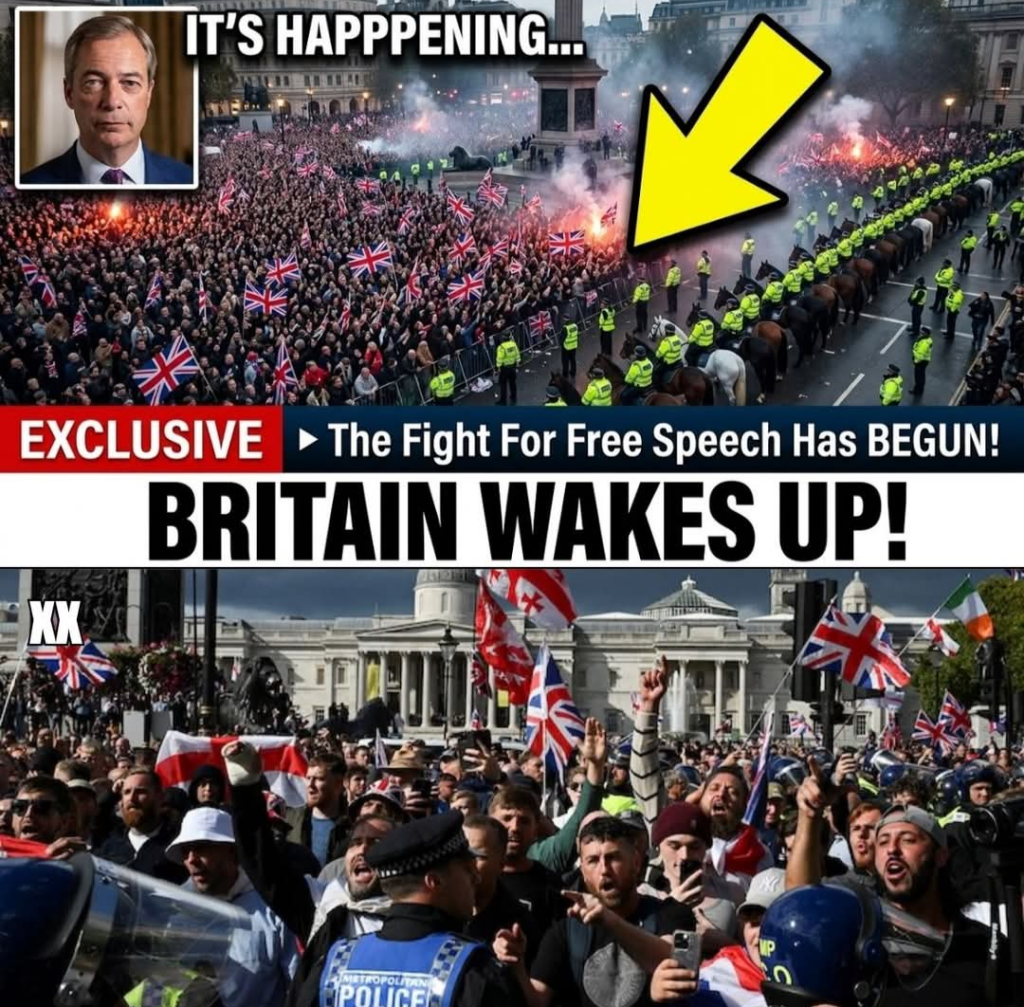
A fresh wave of political tension is sweeping across the United Kingdom, as debates around immigration, religion, and national identity intensify both online and offline. What began as isolated controversies has now evolved into a broader confrontation over who gets to speak—and what can be said—on some of the country’s most sensitive issues.At the heart of the current moment is a growing perception among sections of the public that certain viewpoints have been dismissed or constrained by mainstream institutions. Whether that perception is fully accurate or not, its impact is undeniable: more people are now engaging openly in debates that were once considered politically risky.The “Streisand Effect” in PoliticsObservers often point to what’s known as the Streisand effect—a situation where attempts to suppress or downplay a topic end up amplifying it instead.Recent controversies in Britain appear to follow this pattern. Efforts to limit or challenge certain narratives—whether through media criticism, platform moderation, or political rebuttal—have in some cases led to even wider discussion.The result is a feedback loop:A controversial statement is madeIt is criticized or challengedThe reaction draws more attention than the original remarkPublic engagement surgesWhy This Debate Is GrowingSeveral underlying factors are driving the intensity of the current moment:Immigration pressures and policy debates, particularly since BrexitConcerns about freedom of speech and expressionA widening gap between public sentiment and political messagingThe accelerating role of social media in shaping narrativesThese forces combine to create an environment where even a single exchange—political, media-driven, or viral—can quickly escalate into a national conversation.The Role of Political LeadershipLeaders, including Prime Minister Keir Starmer, are navigating a delicate balance. On one hand, there is pressure to maintain social cohesion and prevent harmful rhetoric. On the other, there is increasing demand from voters for open discussion of difficult topics.Opposition figures and smaller parties have also seized the moment, often framing the issue as one of voice versus control—arguing that ordinary citizens feel unheard.Media Under ScrutinyMainstream media outlets are facing renewed criticism from multiple directions. Some accuse them of underreporting certain concerns, while others argue they give too much space to polarizing viewpoints.This has led to a fragmentation of information sources, where:Traditional media competes with independent platformsViral clips sometimes outweigh full-context reportingAudiences gravitate toward sources that align with their viewsThe result is not just disagreement—but entirely different versions of the same story.The Power of a Single Viral ExchangeYou mentioned “one exchange” capturing national attention—that’s increasingly how modern political moments unfold.A short clip, a heated debate, or a controversial comment can:Reach millions within hoursSpark reaction videos, commentary, and analysisInfluence public perception far beyond its original contextIn many cases, the reaction becomes more significant than the original event itself.Public Reaction: Frustration and MobilizationFor some Britons, the current moment represents a release of long-held frustration. They see it as an opportunity to speak more freely about issues they believe have been sidelined.For others, it raises concerns about rising polarization and the risk of rhetoric crossing into hostility or division.Both perspectives are shaping the debate—and often clashing directly.Risks of EscalationAs discussions intensify, there are growing concerns about:Misinformation spreading rapidlyCommunities becoming more dividedOnline rhetoric influencing real-world tensionsAuthorities and civil society groups are closely monitoring how online discourse translates into offline behavior.